United Telecoms has added direct WhatsApp Business integration to its omnichannel customer engagement platform for South African businesses, letting companies manage WhatsApp alongside other channels from one dashboard. This confirms a global shift: WhatsApp is no longer a side channel, it's becoming the default front door for customer conversations, and businesses everywhere (including in India) need a proper platform, not just an app, to handle it well.
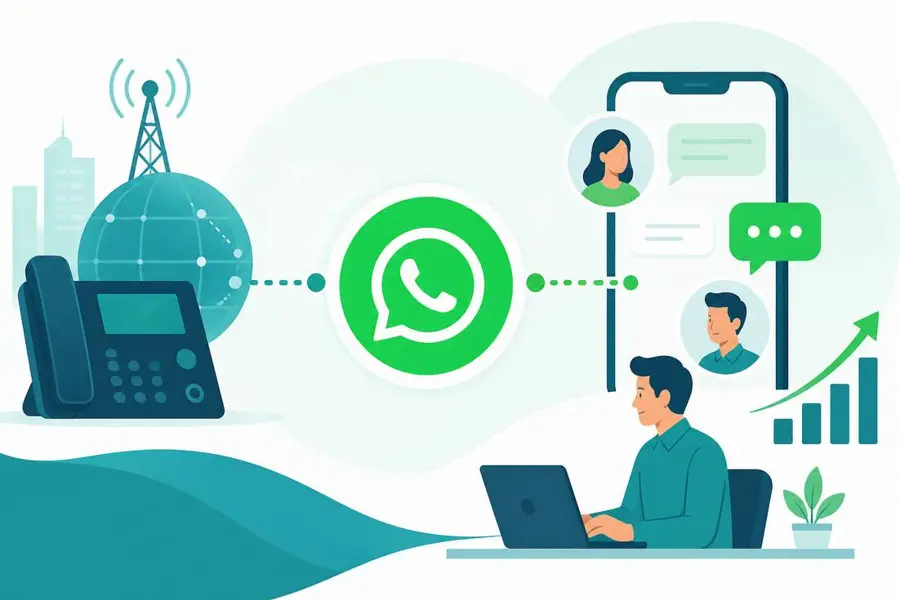
United Telecoms, a South African communications provider, recently announced that it has built direct WhatsApp integration into its omnichannel platform. Businesses using its system can now send and receive WhatsApp messages from the same dashboard where they already manage SMS, email, voice or other channels. This is not a small feature update. It signals something bigger happening across the world: WhatsApp has stopped being an optional extra and become core infrastructure for how businesses talk to customers.
What exactly did United Telecoms announce?
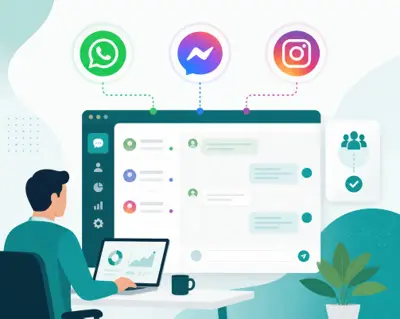
United Telecoms plugged WhatsApp Business messaging directly into its existing omnichannel customer engagement platform, which South African businesses already use for other communication channels. Instead of asking a separate team to log into WhatsApp Business App on a phone, or juggling a standalone WhatsApp tool, companies can now route WhatsApp conversations through the same system they use for everything else. Agents see WhatsApp chats sitting next to SMS threads and other channel conversations, all in one queue.
This is a straightforward but important engineering and product decision. It tells you that even telecom-grade infrastructure providers, who have traditionally sold voice and SMS, now treat WhatsApp as a first-class channel worth building deep integration for, not a bolt-on.
Why are omnichannel platforms racing to add WhatsApp?
The short answer is that customers moved first, and businesses are catching up. WhatsApp is the primary messaging app for well over 2.5 billion people globally, and in markets like South Africa and India it is often the single most-used app on a phone, ahead of SMS, email and even calls for personal communication.
In India specifically, WhatsApp has crossed 500 million users, and for a huge share of small and mid-size businesses it has quietly become the default support line even before they set up anything formal. A customer asking 'is my order shipped' or 'do you have this in size L' on WhatsApp expects a reply as fast as they'd get on a phone call. Businesses that only handle this manually on a personal phone lose track of conversations, miss follow-ups, and cannot measure anything.
So platforms that already handle SMS, voice, email and web chat have a strong reason to add WhatsApp: their customers are asking for it, and keeping everything in one inbox reduces the chaos of switching between five apps to answer one customer.
What does 'direct WhatsApp integration' actually mean technically?
When a platform says it has 'direct' WhatsApp integration, it usually means it connects through Meta's official WhatsApp Business Platform (the Cloud API), not the free WhatsApp Business App you download on a phone. This distinction matters a lot:
- The official API allows multiple team members to work on the same WhatsApp number at once, unlike the app which is tied to one device.
- It supports pre-approved message templates, so businesses can send order updates, reminders or promotions outside the 24-hour reply window.
- It plugs into a CRM or ticketing system, so every chat has history, notes and assignment, instead of living only in someone's phone.
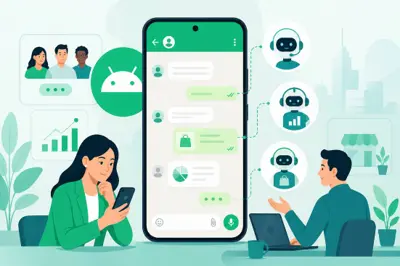
- It supports automation, bots and rich content like catalogs, buttons and quick replies, which the basic app cannot do at scale.
So when United Telecoms talks about 'direct WhatsApp integration,' they are really talking about giving South African businesses proper API-level access wrapped inside a familiar dashboard, rather than a clunky workaround.
What should an Indian business owner take from a South African story?
The market is different, but the pattern is identical to what's happening in India. Retailers, clinics, real estate agents, D2C brands and local service businesses across India are all discovering the same thing United Telecoms' customers are discovering: managing WhatsApp on a personal phone works for the first 20 customers, then falls apart at 200.
Common breaking points look the same everywhere:
- Multiple staff need to reply to the same WhatsApp number, but the app only allows one device to be logged in properly at a time.
- There's no record of who replied what, so a new team member has no context on a returning customer.
- Sending 500 people a Diwali offer or a payment reminder means individually forwarding messages, which WhatsApp's app was never built for.
- There's no way to connect WhatsApp to the order system, booking calendar or payment link, so everything is copy-pasted manually.
This is exactly the gap that omnichannel-plus-WhatsApp integrations, wherever in the world they're built, are trying to close.
Is having WhatsApp API access alone enough?
Not really, and this is worth being honest about. Getting WhatsApp connected to a dashboard solves the 'multiple people, one inbox' problem, but a business usually needs more than a shared inbox to actually grow revenue and cut manual work:
- A way to automate replies to common questions (order status, store timings, price lists) without a human typing the same answer fifty times a day.
- A bot builder simple enough for a non-technical shop owner to set up, not something that needs a developer on retainer.
- Broadcast tools that respect WhatsApp's rules but still let you run a sale announcement or a payment reminder campaign to your full customer list.
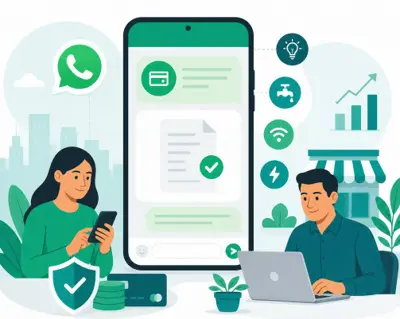
- Commerce features, catalog, cart, and payment links, so a customer can browse and buy without leaving the chat.
- Booking and calendar integration for businesses like salons, clinics and consultants who live on appointments.
A dashboard that only shows WhatsApp messages next to SMS messages is a good start. The real value shows up when automation, commerce and CRM sit on top of that same WhatsApp number.
WhatsApp integration isn't the finish line for a business, it's the starting line. What you build on top of that connection is what actually saves time and closes sales.
How does ODIV Engage bring this to Indian businesses?
This is precisely where ODIV Engage was built to sit. Rather than treating WhatsApp as one channel among many bolted onto old infrastructure, ODIV Engage is WhatsApp-first, built directly on Meta's official WhatsApp Business Platform (Cloud API), with Instagram, Facebook and RCS alongside it.
Practically, this means an Indian business gets everything the omnichannel-plus-WhatsApp trend is chasing, in one place: a shared team Inbox so your whole staff can reply from one number without confusion, a DIY + AI 'Vibe' Bot Builder to set up automated replies without writing a single line of code, an Automations Builder for order confirmations and reminders, trainable AI Agents that handle repetitive questions, Campaigns and Broadcasts for announcements and offers, WhatsApp commerce with catalog, cart and payments built in, Calendar booking bots for appointment-based businesses, WhatsApp Mini Apps and Flows for richer interactions, lead-capture forms, and a website Chat Widget that funnels visitors straight into WhatsApp.
If your business is still juggling WhatsApp on a personal phone, ODIV Engage lets you move to a proper shared inbox with automation and commerce built in, without needing a developer. Plans start from Rs 70/month for quick-start needs and Rs 999/month for the full platform. Start a free trial (autopay/e-mandate required to activate) at engage.odivend.com/pricing.
You don't need to wait for a South African-style announcement to get this in India. It's already available, sized for everything from a single-location shop running a quick broadcast plan, to a growing D2C brand that needs the full Growth or Scale plan with commerce and AI agents working together.
What's the real takeaway from this news?
United Telecoms integrating WhatsApp into its omnichannel platform is one more confirmation that WhatsApp has become core business infrastructure, not a side channel. For Indian founders and business owners, the lesson isn't about South Africa specifically, it's a nudge to check whether your own WhatsApp setup is still stuck on a phone, or whether it has grown into a proper system with a shared inbox, automation and commerce built around it.