On 3 September 2026, Meta launched Bill payments inside WhatsApp for India, letting users find, track and pay household bills like electricity, gas, water, FASTag, insurance and loans across 22,722 billers and 30 categories, powered by Bharat Connect (BBPS), via UPI, debit or credit card. It's rolling out gradually to all Android and iOS users, and it signals WhatsApp is becoming a full transaction surface, not just a chat app, which raises the bar for how businesses should already be using WhatsApp for payments and support.
Meta has switched on Bill payments inside WhatsApp for India. From 3 September 2026, people can find, track and pay their regular household bills, electricity, gas, water, FASTag, insurance, credit card dues, loan EMIs, right inside the chat app they already open forty times a day. This is not a small feature update. It's WhatsApp quietly turning itself into a place where money moves, not just messages.
What exactly did Meta launch?
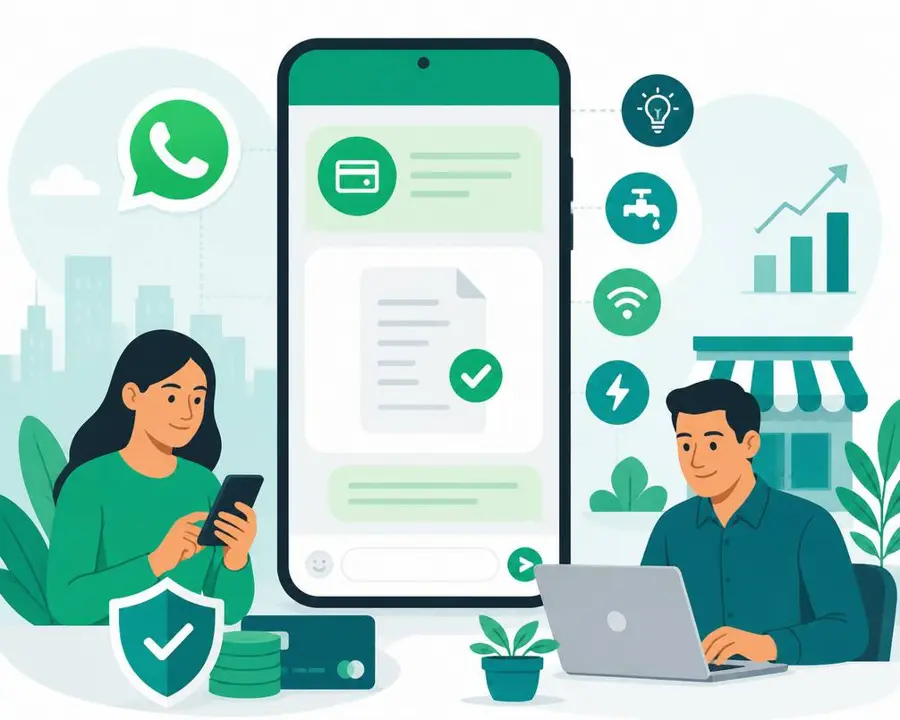
Meta's own announcement says WhatsApp users in India can now discover and pay bills across 22,722 billers spanning 30 categories. That's a genuinely large number, it covers most state electricity boards, gas distributors, water utilities, DTH and broadband providers, FASTag recharges, insurance premiums, credit card payments and loan repayments. Instead of opening five different apps or websites to pay five different bills, a user can do it from one thread inside WhatsApp.
The feature sits behind a simple entry point: a ₹ (rupee) icon at the top of the WhatsApp home screen. Tap it, and you land on a bill payments hub, not a chat.
How does paying a bill on WhatsApp actually work?
Based on Meta's description, the flow is built to feel familiar to anyone who has used a UPI app before, but wrapped inside WhatsApp:
- Tap the ₹ icon on the WhatsApp home screen to open bill payments.
- Search or select a biller (say, your electricity board or gas provider) from the list of 22,722 billers.
- Add or link your account, and manage multiple accounts under the same provider (useful if you pay bills for more than one property or connection).
- View past payments and see upcoming bills before they're due.
- Pay using UPI, debit card, or credit card, whichever mode you prefer.
This is the same pattern most Indians already use on dedicated bill-pay apps, brought into a chat interface that doesn't need a separate login or app download.
Why is Bharat Connect (BBPS) the important part here?
Meta says the feature is powered by Bharat Connect, formerly known as BBPS, the Bharat Bill Payment System run under NPCI's umbrella. This matters for two reasons. First, it means WhatsApp isn't building its own biller network from scratch, it's plugging into the same regulated, interoperable rails that power bill payments across Paytm, PhonePe, Google Pay and most bank apps. Second, it means the 22,722 billers already exist and are already compliant, WhatsApp is simply becoming a new front door to a system that's been quietly running in the background of Indian digital payments for years.
This is also a continuation of a longer arc. WhatsApp payments in India started back in November 2020 through a partnership with NPCI on UPI for peer-to-peer money transfers. Restrictions on that payments base were lifted at the end of 2024, letting WhatsApp scale payments to its full user base. Then in April 2026 it added prepaid recharges. Bill payments is the next logical step, and probably the biggest one yet in terms of daily-use frequency.
What does this mean for how Indians use WhatsApp day to day?
Bill payment is one of the most repetitive things a person does online, every single month, for multiple categories. It's also one of the stickiest reasons to open an app regularly. By bringing that habit into WhatsApp, Meta is making the app less of a messaging tool and more of a daily utility, closer to what WeChat became in China. For a country where WhatsApp is already the default communication layer for both personal chats and business conversations, adding recurring bill payments deepens that dependency.
Meta rolled this out gradually to Android and iOS users over the coming weeks, no pricing or API change was announced for businesses. But the signal is clear: WhatsApp wants to be where Indians handle recurring money moments, not just recurring conversations. Businesses that already talk to customers on WhatsApp now compete for attention on a screen where bills, reminders and payments live too.
What should Indian businesses actually take away from this?
This launch is consumer-facing, it's for individuals paying their own household bills, not a new API or pricing change for the WhatsApp Business Platform. But it's a strong signal for any business, especially utility-adjacent ones like housing societies, local ISPs, insurance agents, loan collection teams, or subscription services, that customer expectations are shifting.
If your customers can now pay their electricity bill without leaving WhatsApp, they will increasingly expect to:
- See their outstanding bill or due amount inside a chat, not just get a reminder call.
- Get a payment reminder that they can act on immediately, in the same window.
- Ask a question about a bill or payment and get a real answer without waiting on hold.
- Complete a payment and get confirmation, all in one thread, without switching apps.
WhatsApp is no longer just where you send a customer a message, it's where the customer expects the entire transaction, discovery, payment, and support, to happen without leaving the chat.
Is this the same as WhatsApp payments for businesses and merchants?
Not quite, and it's worth being precise here. This Bharat Connect bill-pay feature is for consumers paying utility and loan billers, it isn't a merchant checkout tool. Separately, Meta already introduced tools in September 2025 letting small businesses accept payments directly inside the WhatsApp Business app via QR codes, one tap to pay. So there are now two related but distinct tracks: consumers paying big billers through Bharat Connect, and small merchants accepting payments from customers through WhatsApp Business. Both point the same direction, WhatsApp becoming a place where money changes hands, not just words.
How ODIV Engage helps you act on this today
Here's the practical move for any Indian business reading this. You can't plug into Bharat Connect as a biller yourself, but you can absolutely make sure your WhatsApp presence matches the standard Meta is now setting, instant, in-chat, payment-ready conversations, and you can do it without touching a single line of raw Cloud API code.
With ODIV Engage, a business owner (no developer needed) can set this up directly:
- Turn on WhatsApp commerce in ODIV Engage, add your product or service catalog, and let customers browse, add to cart, and pay via UPI or card links right inside the chat, the same in-chat payment experience customers are now getting used to for their bills.
- Use the Automations Builder to send bill or due-date style reminders automatically, a rent due notice, an EMI collection nudge, a subscription renewal, timed exactly when the customer needs it, not buried in an SMS they'll ignore.
- Set up a trainable AI Agent to answer 'what's my due amount' or 'how do I pay' questions instantly, 24x7, without a human agent typing the same answer fifty times a day.
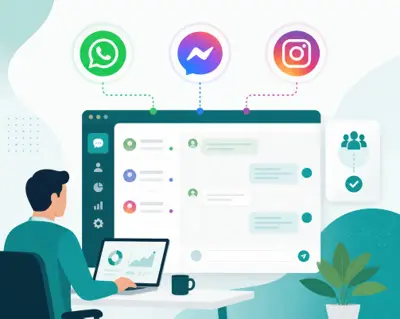
- Route every payment-related query into the shared team Inbox so your support and collections team see the full customer history, past chats, past payments, in one place instead of switching between WhatsApp Web and a spreadsheet.
You could try to hand-build all of this on the raw WhatsApp Business Platform (Cloud API) yourself, but that means managing webhooks, templates, payment reconciliation and support workflows from scratch, with your own engineering time and ongoing maintenance. ODIV Engage already has it built, tested and supported, on the official WhatsApp Business Platform, alongside Instagram, Facebook and RCS in the same inbox. Quick-start plans begin at Rs 70/mo for simple broadcast needs, and the full platform with commerce, automations and AI agents starts at Rs 999/mo on the Starter plan. Start a free trial (set up with autopay or e-mandate) and see it running on your own number in a day, not a quarter. Check current plans at https://engage.odivend.com/pricing.